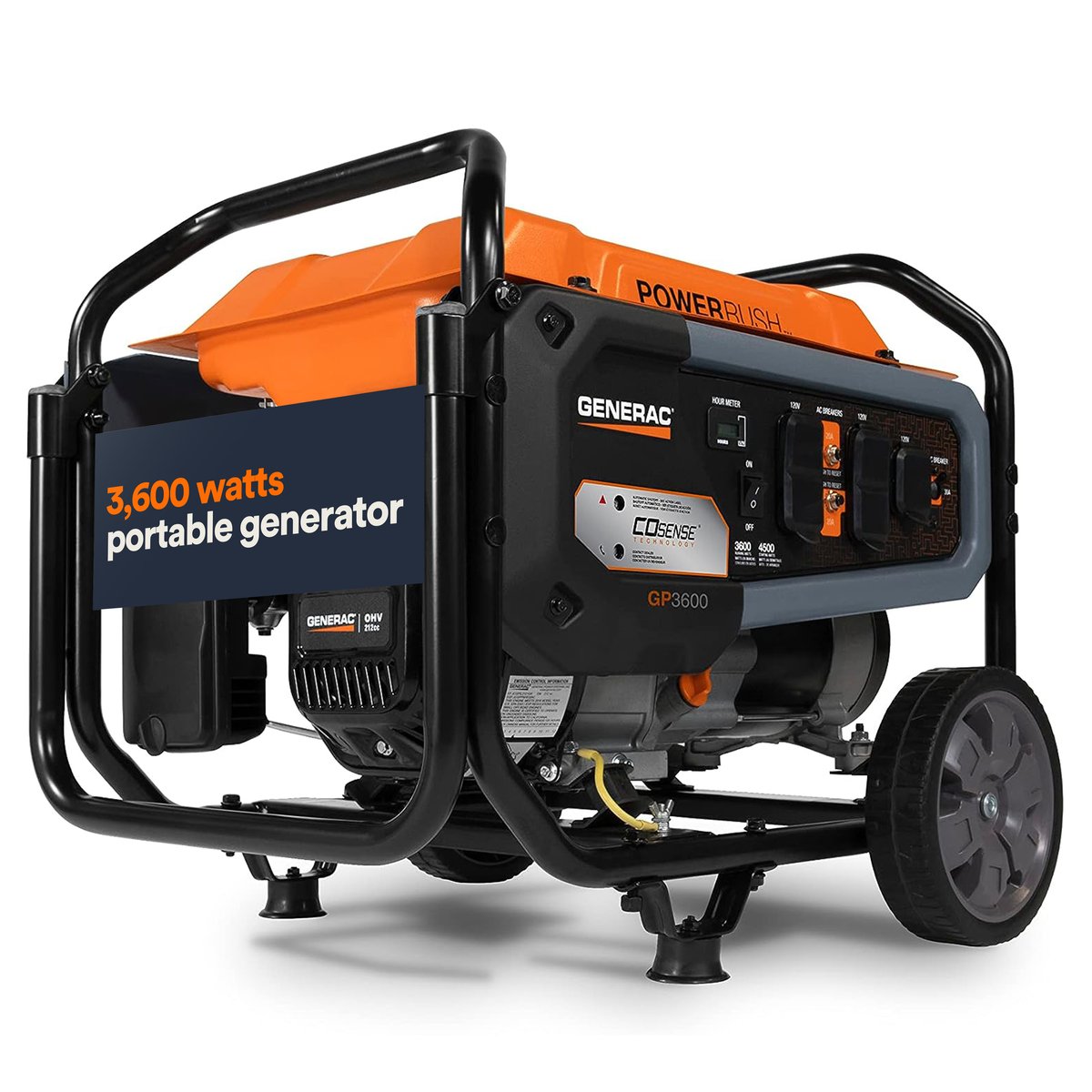
The hum of a generator during a power outage is more than just noise; it’s the sound of comfort, safety, and continuity when the grid goes dark. For many, the name Generac is synonymous with reliable backup power. But if you’re considering a Generac portable generator, you might be surprised by the range of options and the considerations that go far beyond just the initial price tag. This guide cuts through the noise, offering clear, actionable insights into Generac portable generator pricing and all the crucial factors you need to weigh before making your investment.
Unlike their whole-house standby counterparts, portable generators are about flexibility, immediate needs, and a significantly lower entry cost. But don't let the smaller price fool you into thinking the decision is simple. Choosing the right portable Generac means understanding power needs, fuel types, features, and even hidden costs that can quickly add up.
At a Glance: Generac Portable Generator Pricing & Key Takeaways
- Price Range: Generac portable generators typically cost between $500 and $2,500, with inverter models often falling between $1,000 and $3,000.
- Wattage Matters: Smaller units (1,000-3,000 watts) suit camping or basic essentials, while larger ones (5,000-17,500 watts) can handle more home appliances or job site demands.
- Fuel Options: Most portables run on gasoline, but dual-fuel models (gasoline/propane) offer versatility.
- Inverter Advantage: Inverter generators are quieter, more fuel-efficient, and produce cleaner power for sensitive electronics, but come at a higher price.
- Beyond the Unit Cost: Factor in fuel, heavy-duty extension cords, a manual transfer switch (for home connection), oil, and maintenance supplies.
- No "Installation": Unlike standby generators, portables don't have complex installation costs, but safe operation requires proper setup.
- Sizing Up: Always assess your essential power needs (starting and running watts) and consider a slightly larger generator than you think you need.
Understanding Generac Portables: Your Flexible Power Ally
When you hear "Generac generator," your mind might jump to those large, automatic whole-house units permanently installed in a yard. While Generac absolutely dominates that market, they also offer a robust lineup of portable generators designed for a different kind of need: flexible, on-demand power wherever you need it.
These aren't your typical long-term, whole-home backup solutions. Instead, Generac portable generators are your go-to for situations where you need power now and there. Think camping trips, tailgating parties, powering tools on a remote job site, or keeping essential appliances running during a shorter home power outage.
Generac's portable offerings span a broad spectrum, from compact power inverters perfect for charging devices to hefty 17,500-watt conventional generators capable of powering a substantial portion of a home. The critical distinction lies in their manual operation—you wheel them out, fill them up, start them, and plug things in.
The Core Types of Generac Portable Generators
Generac primarily offers two main types of portable generators, each with distinct advantages and price points:
- Traditional Portable Generators (e.g., GP Series): These are the workhorses. Ranging from roughly $500 to $2,500, they provide raw power, often with larger engines and fuel tanks. They’re excellent for running power tools, sump pumps, refrigerators, and basic lighting. However, they can be louder and produce less "clean" power, which isn't ideal for highly sensitive electronics like laptops or smart TVs without a surge protector. Their power output can range from a few thousand watts up to Generac's largest portable offering at 17,500 watts, which is a beast typically reserved for serious construction or industrial applications.
- Inverter Generators (e.g., iQ Series, GP Inverter Series): If quiet operation, fuel efficiency, and clean power are priorities, Generac's inverter generators are worth the higher investment, typically $1,000 to $3,000. They use advanced technology to produce power that's stable and safe for all your electronics. They're also significantly quieter than traditional portables, making them ideal for camping, tailgating, or neighborhoods where noise is a concern. Generac's inverter options often come with features like electric start and USB ports, making them incredibly user-friendly. If you're looking for Generac's inverter options, expect a premium experience.
Choosing between these often boils down to your primary use case, your budget, and how much noise you're willing to tolerate.
Generac Portable Generator Pricing: What to Expect and Why
When you start looking at Generac portable generators, you'll quickly see that pricing isn't uniform. It's a spectrum, driven by a few key factors:
- Wattage Output: This is the most significant determinant. More power (higher watts) means a larger engine, bigger alternator, and a higher price tag.
- 1,000-3,000 Watts: Perfect for light use—camping, small electronics, a few lights. Expect to pay $500-$1,200. These are often inverter models.
- 3,000-6,000 Watts: Good for basic home essentials during an outage (fridge, some lights, phone charging, maybe a small space heater). Prices typically range from $700-$1,500.
- 6,000-10,000 Watts: Can handle more appliances, a window AC unit, or a small furnace fan. You'll likely spend $1,200-$2,000.
- 10,000+ Watts (up to 17,500W): These powerful units are for heavy-duty home backup, multiple large appliances, or serious job site demands. Prices generally start around $1,800 and can go up to $2,500+.
- Engine Size & Quality: A larger, more robust engine designed for extended run times will cost more. Generac uses reliable engines, but there are differences between their entry-level and premium models.
- Fuel Type: While most portables are gasoline-powered, dual-fuel models (gasoline and propane) offer flexibility and can sometimes command a slightly higher price. Propane burns cleaner and stores longer, but gasoline is more readily available.
- Features & Technology:
- Electric Start: A button press is far easier than a pull cord, especially in an emergency. Adds to the cost.
- CO-Sense™ Technology: This critical safety feature automatically shuts down the generator if dangerous carbon monoxide levels are detected. It's an invaluable addition, often found on newer Generac models, and a worthy investment.
- Low-Oil Shutoff: Protects the engine from damage. Standard on most good units.
- GFCI Outlets: Provides ground-fault circuit interrupter protection for safety, especially when operating in wet conditions.
- Wheel Kits & Fold-Down Handles: Enhance portability (often standard on larger units).
- Digital Displays: Provide real-time data on runtime, power output, and maintenance reminders.
- Mobile Link™ Wi-Fi Connectivity: While more common on standby units, some advanced portable generators may offer remote monitoring via a smartphone app for fuel levels and maintenance alerts. This feature definitely adds to the price.
Remember, the advertised price is just for the unit itself. To get a true picture of what does a Generac cost, you need to factor in everything else.
Beyond the Sticker Price: Essential Accessories & "Hidden" Costs for Portables
Unlike a whole-house standby generator where installation costs can range from $1,800 to a staggering $12,000+, portable generators don't require professional installation in the same way. However, operating them safely and effectively at home demands a few key accessories and ongoing considerations:
- Fuel: This is your generator's lifeblood.
- Gasoline: Requires storage in approved containers. Stabilizer is recommended for long-term storage to prevent fuel degradation. A 5-gallon can might cost $15-$20, and you'll want several.
- Propane: If you have a dual-fuel model, 20lb propane tanks (like for a grill) are common. They cost about $20-$30 to refill.
- Cost Factor: A 5,000-watt portable generator under a decent load might burn 0.5-0.8 gallons of gasoline per hour. During a 24-hour outage, that's 12-19 gallons, or $40-$70+ just in fuel.
- Heavy-Duty Extension Cords: You cannot just plug your generator into any wall outlet (more on that below). You'll need outdoor-rated, heavy-gauge extension cords (e.g., 10-gauge for higher wattage) to run from the generator to your appliances or a manual transfer switch. These aren't cheap; expect to pay $40-$100+ per cord depending on length and gauge.
- Manual Transfer Switch or Interlock Kit: This is CRITICAL for safely connecting a portable generator to your home's electrical panel.
- Manual Transfer Switch: A dedicated subpanel that allows you to safely switch specific circuits from utility power to generator power. Requires professional installation by a licensed electrician, costing anywhere from $500-$1,500+ for the switch and labor. This is not a DIY project.
- Generator Interlock Kit: A metal plate that prevents you from turning on both your main breaker and your generator's breaker simultaneously, preventing dangerous backfeeding into the grid. Cheaper than a full transfer switch ($100-$300 for the kit, plus electrician labor, typically $200-$500).
- Why You Need It: Without one, you risk "backfeeding" electricity into the utility lines, which can electrocute utility workers. It also prevents damage to your appliances when utility power restores.
- Oil: Generators need oil changes, just like your car. Always have a bottle of the recommended oil (often synthetic blend for better performance) on hand.
- Generator Cover: Protects your investment from the elements. Expect to pay $30-$70.
- Security: If your generator will be outdoors, a heavy-duty chain and lock are wise investments, often $30-$60.
- Maintenance Supplies: Air filters, spark plugs, and fuel stabilizer are good to have for routine upkeep. While not as intensive as standby unit maintenance, maintaining your portable Generac is crucial for longevity.
Deciding on the Right Portable Generac for You: Sizing & Features
Choosing the right portable generator starts with a clear-eyed assessment of your needs. Don't just guess; list out everything you must run during an outage, and then everything you want to run.
Calculating Your Portable Power Needs
Portable generators are measured in watts (W). Appliances have two wattages:
- Starting Watts (Surge Watts): The brief burst of power an appliance needs to start (especially those with motors like refrigerators, AC units, pumps).
- Running Watts (Rated Watts): The continuous power an appliance needs to operate.
Here's how to size:
- List Essential Appliances: Write down everything you absolutely need to power.
- Find Wattage: Look for the wattage on the appliance's label, manual, or search online.
- Sum Running Watts: Add up the running watts of all simultaneous items.
- Identify Largest Starting Wattage: Find the single appliance with the highest starting watts.
- Calculate Total: Add the sum of your running watts to the largest single starting wattage. This gives you a rough estimate of the generator size needed.
Example:
- Refrigerator: 800 running watts / 2200 starting watts
- Lights (5 x 60W): 300 running watts
- Phone Chargers: 50 running watts
- TV: 150 running watts
- Sump Pump: 800 running watts / 1600 starting watts
If you want to run the fridge, lights, chargers, and TV, but the sump pump might kick on:
Total Running Watts = 800 (fridge) + 300 (lights) + 50 (chargers) + 150 (TV) = 1300W
Largest Starting Wattage (from fridge or sump pump) = 2200W (fridge) or 1600W (sump pump). If the fridge is always on, use its starting watts.
So, 1300W + 2200W = 3500W. You'd want a generator of at least 3500 running watts, ideally 4000-5000W for a buffer. When sizing a portable generator, it's generally recommended to size up, not down.
Common Portable Generator Scenarios & Wattage Suggestions:
- Camping/Tailgating: 1,000-3,000 watts (often inverter models for quiet operation). Powers lights, small appliances, device charging.
- Basic Home Essentials (Short Outages): 3,000-5,000 watts. Runs a refrigerator, some lights, phone charging, maybe a small TV.
- More Robust Home Backup: 5,000-7,500 watts. Can manage a refrigerator, lights, a freezer, microwave, well pump, or a window AC unit (but likely not all simultaneously).
- Heavy Duty / Job Site: 7,500-17,500 watts. For multiple power tools, larger home sections, or even light welding equipment.
Features to Prioritize:
- Electric Start: A game-changer for convenience, especially if you're not keen on pull-starting a cold engine.
- CO-Sense™ Technology: Non-negotiable for safety. This Generac innovation literally saves lives by shutting down the unit before CO levels become deadly.
- Outlets: Ensure it has the right types and number of outlets for your needs (e.g., 120V standard, 240V for larger appliances, USB ports).
- Run Time: Check the estimated run time at 50% load. A larger fuel tank means less frequent refueling.
- Portability: Consider weight, wheel size, and handle design if you plan to move it frequently.
Portable vs. Standby: When to Choose What (and Why the Price Difference)
It’s crucial to clarify the significant difference between Generac portable generators and their standby (whole-house) counterparts, as the pricing and considerations are vastly different. Much of the higher-end pricing information you might encounter (like $6,000-$15,000+ for a whole setup or $2,500-$10,000+ for the unit alone) refers to standby generators, not portables. For a deeper dive into the full Generac standby generator cost picture, that's a different discussion entirely.
Why the Huge Price Gap?
The simple answer: convenience, capacity, and automation.
Generac Portable Generators (Typically $500-$3,000):
- Pros:
- Lower Upfront Cost: Significantly more affordable.
- Mobility: Can be used anywhere—home, camping, job site.
- No Complex Installation: Just unbox, add oil/fuel, and start.
- Simpler Maintenance: Easier for a homeowner to manage.
- Cons:
- Manual Operation: You have to roll it out, start it, and refuel it.
- Limited Capacity: Can only power a select number of appliances.
- Noise: Can be quite loud, especially traditional models.
- Fuel Management: Requires storing and handling gasoline or propane.
- Less Reliable for Extended Outages: Requires constant monitoring and refueling.
Generac Standby Generators (Unit typically $2,000-$10,000+, Total setup $6,000-$15,000+): - Pros:
- Automatic Operation: Kicks on automatically during an outage, even when you're not home.
- Whole-House Power: Can power everything in your home, including central AC and electric car chargers.
- Fuel Source: Connects directly to natural gas or a large propane tank; no refueling needed during an outage.
- Quieter Operation: Often run quieter than portables, and are installed away from living areas.
- Permanent Solution: Integrated into your home's infrastructure.
- Cons:
- High Upfront Cost: Both the unit and installation are significantly more expensive.
- Complex Installation: Requires permits, electrical work, gas line hookup, and a concrete pad. This is not a DIY project.
- Ongoing Maintenance: Requires annual professional service (costing $200-$500/year).
When to Choose a Portable: If you experience infrequent, shorter power outages, need power for recreational activities, or are on a tighter budget, a Generac portable generator is an excellent choice.
When to Consider a Standby: If power outages occur more than twice a year, you work from home, have critical medical equipment, rely on a sump pump or well pump, or simply value the ultimate convenience and peace of mind of seamless, whole-house backup, then you're looking at a standby unit.
Keeping Your Portable Generac Running Smoothly: Maintenance & Longevity
A portable generator is an investment that needs proper care to ensure it fires up when you need it most. While maintaining your portable Generac is simpler than a standby unit, it’s still critical.
- Read the Manual: This seems obvious, but every Generac model has specific recommendations for oil type, spark plugs, and service intervals.
- First Oil Change: Perform the initial oil change after the first 20-25 hours of operation to remove manufacturing debris.
- Regular Oil Changes: Typically every 50-100 hours of use or annually, whichever comes first. Use the recommended oil weight.
- Fuel Management:
- Stabilize Fuel: Always use a fuel stabilizer if you're not going to run the generator regularly (e.g., storing it for more than a month).
- Run It Dry (for storage): For very long-term storage (several months), it's often best to run the generator until it's out of fuel to prevent carburetor gumming. Or, drain the fuel completely.
- Fresh Fuel: Always use fresh gasoline. Stale fuel (older than 3-6 months) can cause starting issues and damage.
- Air Filter: Check and clean/replace the air filter regularly, especially if operating in dusty conditions. A dirty filter chokes the engine and reduces efficiency.
- Spark Plug: Inspect and replace the spark plug annually or as recommended. A clean, properly gapped spark plug ensures easy starting and efficient combustion.
- Test Runs: Run your portable generator for 15-30 minutes every 2-3 months. This circulates oil, keeps seals lubricated, and ensures it's ready for action.
- Storage: Store your generator in a clean, dry place, ideally covered, and away from living areas due to residual fuel fumes.
Where and When to Buy Your Portable Generac
Unlike standby generators, where professional installation by an authorized dealer is paramount, purchasing a portable Generac generator offers more flexibility.
Where to Buy:
- Big Box Stores (Home Depot, Lowe's, Tractor Supply): Often offer competitive pricing, good availability, and easy returns. This is often the best route for typical portable generators.
- Online Retailers (Amazon, Walmart.com, Power Equipment Direct): Vast selection, often good deals, and convenient delivery. Read reviews carefully.
- Authorized Generac Dealers: While they specialize in standby units, many also carry a selection of portable generators. They might offer slightly higher prices but can provide expert advice and service if you have complex questions, or if you're considering a future standby upgrade. For timing your generator purchase, they might also offer promotions.
When to Buy for the Best Deal:
Timing can save you money, especially on larger purchases.
- Best Times:
- After Hurricane Season (November-December): Demand dips, and retailers often clear inventory.
- Dead of Winter (January-February): Unless you're in a snow-heavy region, this is typically an off-peak season.
- End of the Year: Dealers and retailers might be looking to hit sales quotas.
- Worst Times (Avoid if possible):
- Right Before Storm Season: Demand spikes, and prices typically rise.
- After Major Weather Events: Panic buying drives prices up and depletes stock.
- Peak Summer: Many people are thinking about camping or outdoor events.
Generac's Edge & Alternatives in the Portable Market
Generac has cemented its position as a market leader, and that reputation extends to its portable lineup.
Why Generac Shines:
- Extensive Dealer Network: While less critical for portables, it speaks to their infrastructure and support.
- Competitive Pricing: Generac often offers a strong balance of features and cost.
- Functional Features: Innovations like CO-Sense™ are a significant selling point for safety.
- Reliability: Generac units are generally built to last when properly maintained.
- Range of Products: From small inverters to large conventional portables, they cover most needs.
Considerations:
- Noise: Traditional Generac portables can be louder than some competitors (like Honda or Yamaha inverters). Their inverter line addresses this, however.
- Customer Service: Some users report challenging customer service experiences directly with Generac, though authorized dealers often mitigate this.
Key Alternatives in the Portable Market:
- Honda: Often considered the gold standard for portable inverter generators. Known for exceptional quietness, fuel efficiency, and reliability, but typically the most expensive.
- Yamaha: Another premium brand, similar to Honda in quality, quietness, and price, with a strong following.
- Champion: A popular value brand that offers a wide range of portable and inverter generators at very competitive prices. Good for those on a tighter budget looking for solid performance.
- Ryobi: Offers a range of portable generators, often with good features and competitive pricing, especially for the DIY market.
- Cummins: Known for durability and quieter operation in their larger standby units, their portable offerings are also generally robust, though often at a higher price point than Generac.
When making your decision, consider your specific priorities. If noise is a primary concern for camping, a Honda or Yamaha inverter might be worth the extra cost. If sheer power and value for home backup are key, a Generac GP series could be a perfect fit.
Addressing Common Questions About Portable Generac Generators
Let's clear up some frequent misconceptions and answer common queries about Generac portable generators.
1. Can I run my entire house with a portable Generac generator?
Generally, no, not safely or efficiently. Even a large 17,500-watt portable generator can't power everything in a modern home simultaneously (especially central AC, electric dryer, electric range, and water heater). More importantly, to connect it safely to your home's electrical system, you need a professionally installed manual transfer switch or interlock kit. Without one, you risk severe injury or death.
2. How long can a portable Generac run on a tank of fuel?
This varies wildly depending on the generator's size, the load it's carrying, and the size of its fuel tank. A small inverter running at 25% load might last 10-15 hours on a gallon. A large traditional portable running at 50% load could burn through a 5-gallon tank in 6-8 hours. Always check the specifications for "runtime at 50% load" for a realistic estimate.
3. Are portable generators safe to use indoors?
ABSOLUTELY NOT. Portable generators produce carbon monoxide, an odorless, colorless, and deadly gas. They must always be operated outdoors in a well-ventilated area, far away (at least 20 feet) from windows, doors, and vents to prevent exhaust from entering your home. Generac's CO-Sense™ technology adds a layer of protection, but it's not a substitute for proper outdoor placement.
4. What's the real difference between a traditional portable and an inverter portable?
- Traditional: Produces raw AC power directly from the alternator. It's robust but often louder, less fuel-efficient, and produces "dirtier" power (less consistent waveform) that can be hard on sensitive electronics.
- Inverter: Produces AC power, converts it to DC, then inverts it back to clean AC power. This multi-step process results in a very stable, consistent power waveform safe for all electronics. It also allows the engine to throttle up and down based on demand, making it much quieter and more fuel-efficient. The trade-off is typically higher cost and often lower maximum wattage compared to the largest traditional portables.
5. Do I need to ground my portable generator?
Most modern portable generators are designed with a "bonded neutral" (meaning the neutral conductor is bonded to the frame), making them essentially self-grounding. For general use, like powering tools or extension cords, an external ground rod is often not explicitly required by the generator itself. However, if you are connecting it to your home via a transfer switch, the home's grounding system handles it. Always consult your generator's manual and local electrical codes. When in doubt, grounding to an approved rod is a safe practice.
Making Your Purchase Decision: A Portable Power Checklist
You've explored the world of Generac portable generator pricing and considerations. Now, it's time to solidify your choice. Use this checklist to guide your final decision:
- Assess Your Needs Accurately: List all essential appliances and their running/starting watts. Be realistic about what you need vs. what you want to power.
- Budget Beyond the Unit: Account for fuel, heavy-duty cords, a manual transfer switch/interlock kit (if connecting to your home), and initial maintenance supplies.
- Choose the Right Type: Is quiet, clean power for sensitive electronics a priority (inverter), or is raw power for tools and basic appliances your main goal (traditional portable)?
- Consider Fuel: Are you comfortable storing gasoline, or does the flexibility of a dual-fuel (gasoline/propane) model appeal to you?
- Prioritize Safety Features: CO-Sense™ technology is a must-have for peace of mind.
- Ease of Use: Electric start, wheel kits, and clear control panels make operation much smoother.
- Read Reviews: Check reputable sources for user experiences with your specific Generac model or comparable alternatives.
- Compare Warranties: Understand what Generac's warranty covers and for how long.
- Plan for Storage and Maintenance: Where will you keep it, and are you committed to the necessary upkeep to ensure it's ready when an outage strikes?
Remember, reliable backup power isn't about finding the cheapest option; it's about investing in peace of mind and ensuring that when the lights go out, yours can still shine. By carefully considering these factors, you'll be well-equipped to choose the Generac portable generator that best fits your needs and budget, powering through any disruption with confidence.